Why Customers Walk Past Tyre Shops — and How Better Signage Can Change That
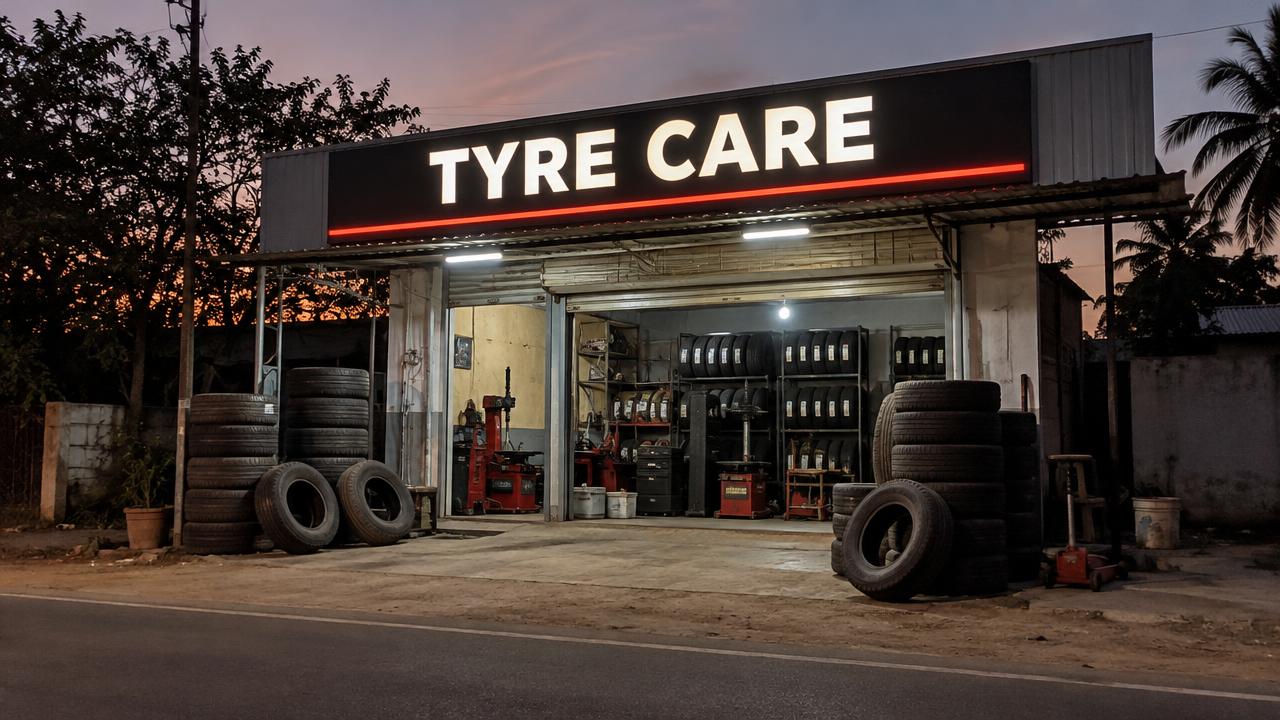
Many tyre shops are simply not noticed in time. Here is how sign type, layout and maintenance affect whether a passing driver stops.
Road-facing visibility: the first few seconds
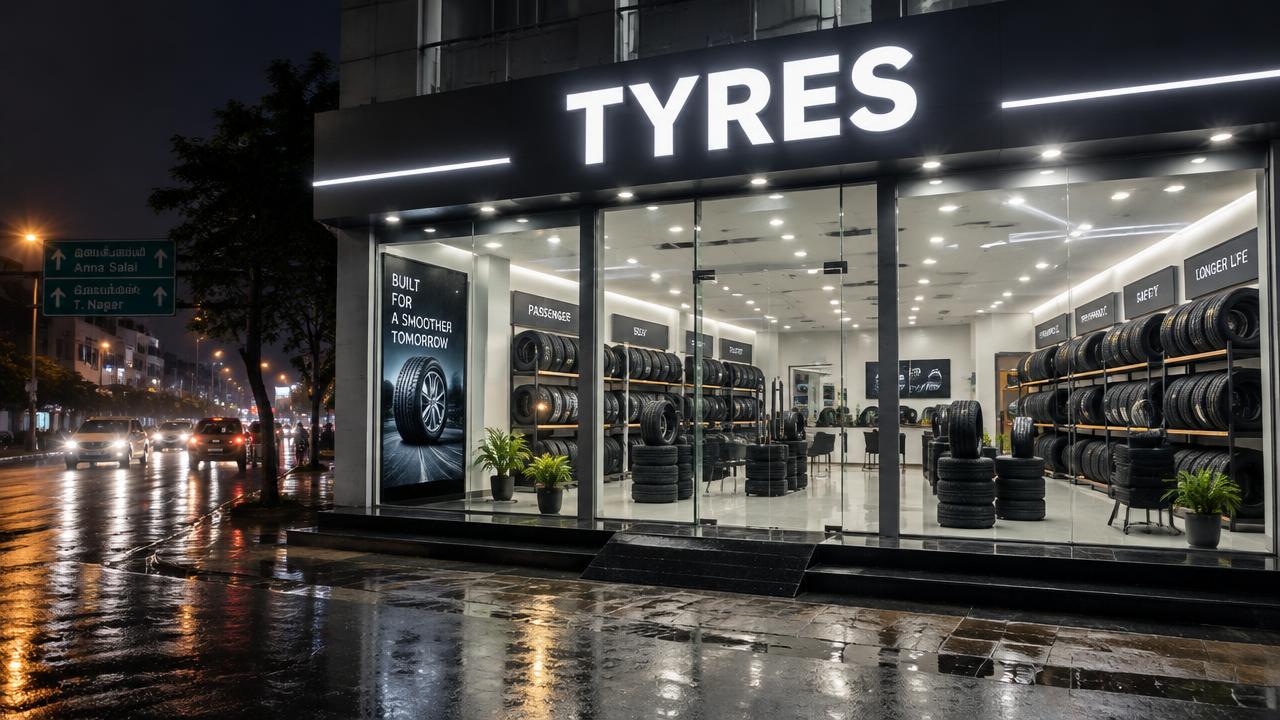
Visibility also changes through the day. A sign that is easy to read at noon may disappear against bright sky in the morning, or vanish completely after sunset if it is not lit. Many tyre purchases happen after office hours, so night-time visibility deserves as much attention as daytime appearance.
A driver looking for a tyre shop is usually moving, watching traffic and scanning both sides of the road. If the shop's sign is small, hidden behind trees or electric poles, faded by the sun or unlit after dark, the driver may pass it before realising it was there — and stop at the next visible outlet instead.
A good tyre shop sign board is planned around how the shop is actually seen: the direction of traffic, viewing distance, height of the fascia, obstructions in front of the shop and whether customers arrive mostly in daylight or in the evening.
Choosing ACP, LED, glow, 3D letters or projecting signs
Each sign type has a role. Many shops use a combination: a main fascia sign plus a projecting sign that can be seen from further along the road.
- ACP boards: a strong, clean fascia that handles outdoor weather well and suits most frontages.
- LED sign boards: bright, even illumination for night visibility and a modern appearance.
- Glow sign boards: an economical lit option for compact shops or secondary signage.
- 3D letters: raised letters that add depth and a premium feel, with or without lighting.
- Projecting signs: mounted at right angles to the wall so drivers approaching from either direction can see the shop.
A readable visual hierarchy
Too much information on one board makes it harder to read. A clear sign usually has one dominant element — the tyre brand or the shop name — followed by one short line describing the service, such as tyres, alignment and balancing. Phone numbers and secondary details can go on smaller boards or near the entrance.
Brand colours should be reproduced accurately, but readability comes first. If a brand colour is placed against a busy or similar-coloured background, a white or dark border panel can help the logo stand out. It is also worth checking the design at actual size from across the road before final approval, rather than only on a screen.
High contrast between letters and background, adequate letter height for the viewing distance and enough empty space around the text all improve readability from a moving vehicle.
Premium, standard and compact dealer signage standards
Dealer outlets vary greatly in size. Rather than one design for every site, many brands define a small set of signage standards so that each outlet gets a suitable and consistent package.
- Premium: wide frontage, 3D or LED letters, lit fascia, projecting sign and full interior branding.
- Standard: ACP or LED fascia, projecting sign and essential interior graphics.
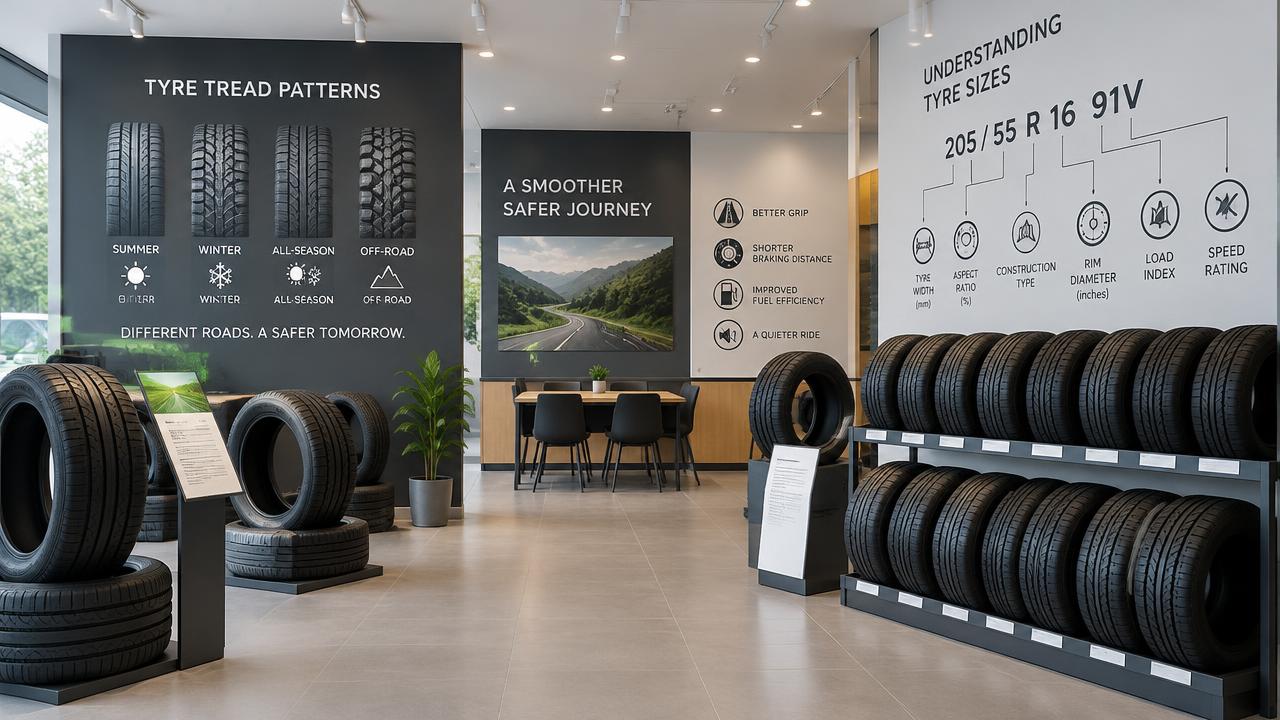
- Compact: glow or ACP board sized for narrow shops, with key interior POSM.
Maintenance and repair
A sign that is not maintained can work against the brand. Common issues include failed LEDs or tubes, faded prints, loose panels after strong winds, dust build-up and damaged letters. A simple schedule of periodic inspection, cleaning and prompt repair keeps the outlet looking cared for.
When placing an order, it helps to ask about the materials used, how lighting components can be replaced and how repairs will be handled.
Evaluate before and after
Ask the dealer and staff for simple feedback as well: do new customers mention that they noticed the shop, and has it become easier for callers to find the outlet using the sign as a landmark? Such observations are informal, but together with photographs and records they help judge whether the change was worthwhile.
Before replacing signage, take dated photographs of the shop front in daylight and at night, and note the dealer's current enquiries and walk-ins where records exist. Repeat the same photographs and observations after installation.
This gives an honest comparison. Remember that walk-ins and sales are also affected by season, pricing and local competition, so look at trends over time rather than a single week.
Manufacturing and installation by Sign Ad India
Sign Ad India manufactures ACP boards, LED and glow sign boards, 3D letters and projecting signs, with in-house printing, CNC and fabrication. Our team also handles site survey, measurement and installation, so the sign that is designed is the sign that fits the site.
If your tyre shop or dealer network needs new or improved signage, share your requirement with us for a proposal.
Frequently asked questions
What size should a tyre shop sign board be?
It depends on the frontage width, fascia height and viewing distance. A site survey with measurements is the best way to decide.
Is an LED sign board better than a glow sign board?
LED boards generally give brighter, more even lighting, while glow boards are an economical option for smaller shops. The right choice depends on location and budget.
Why use a projecting sign?
A projecting sign faces oncoming traffic from both directions, so drivers can see the shop earlier than they would see a flat fascia board.
Discuss your dealer branding requirement
Share your outlet count, locations and requirement, and our team will prepare a proposal.