Dealer Branding Audits: How Tyre Manufacturers Can Identify Missed Retail Sales Opportunities
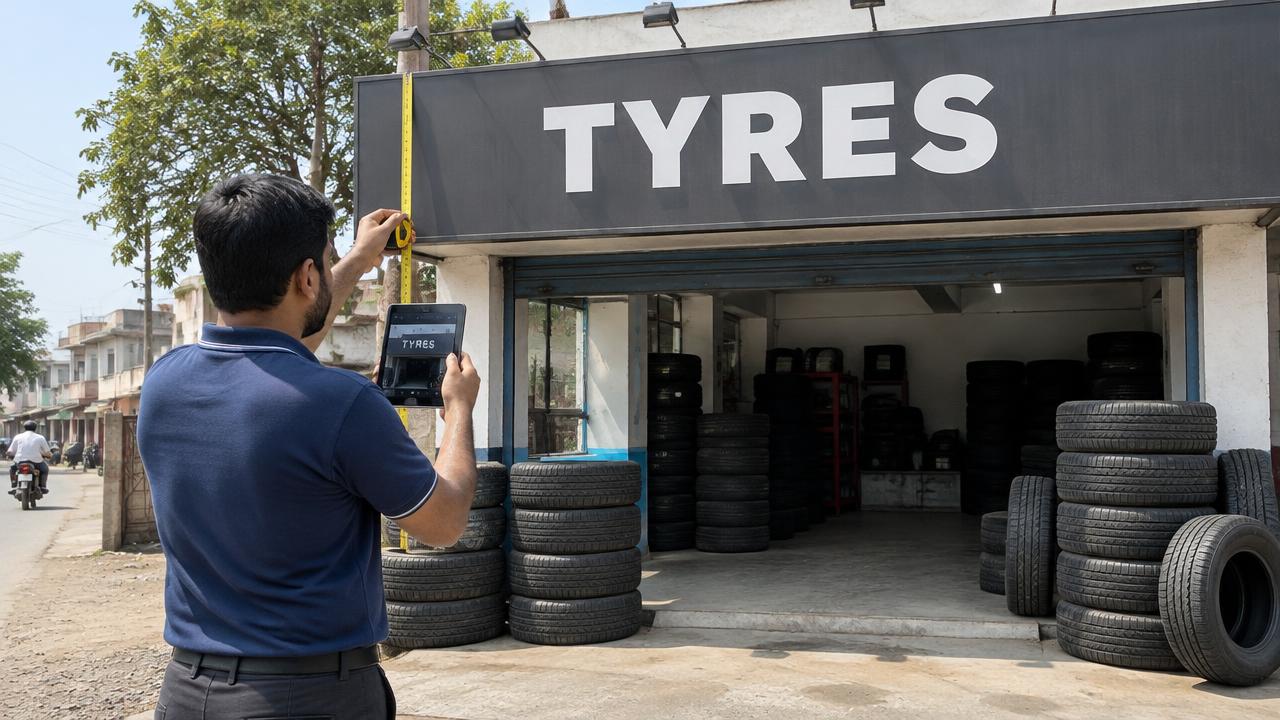
Most tyre manufacturers know how many dealers they have. Far fewer know what each of those shops actually looks like today. A structured branding audit closes that gap and shows where visibility is being lost before money is spent on upgrades.
Why dealer branding audits matter
Dealer branding is usually installed in waves. A campaign launches, boards go up, and then years pass. Over that time signs fade, lights fail, dealers repaint their shops, competitors add their own boards and the original brand standard slowly disappears. Head office often learns about the problem only when a regional manager sends a photograph or a dealer asks for a replacement.
A dealer branding audit is a planned, consistent review of how your brand appears at each outlet — outside on the road, at the entrance and inside the shop. Its purpose is simple: to replace guesswork with a clear picture of which outlets are well branded, which need small fixes and which need serious investment. With that picture, trade marketing and dealer development teams can prioritise budgets, avoid replacing boards that are still in good condition, and focus attention on the outlets where better visibility is most likely to make a difference.
1. Exterior signboard visibility
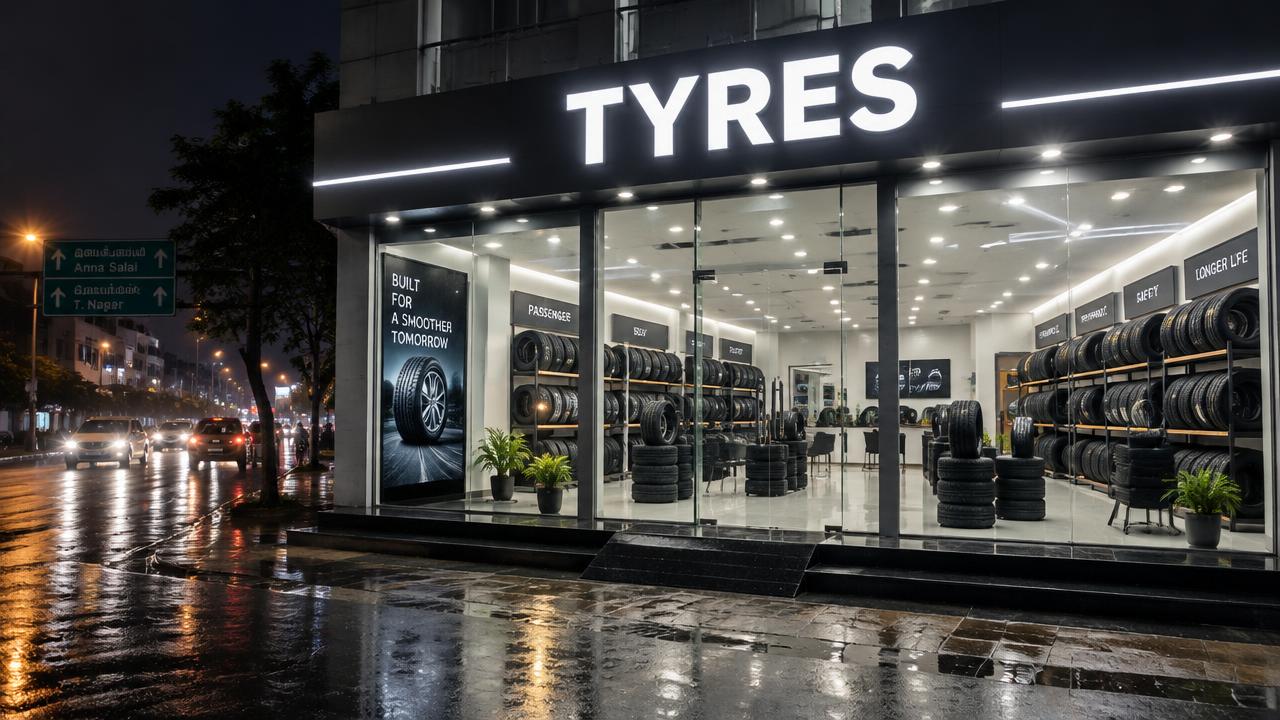
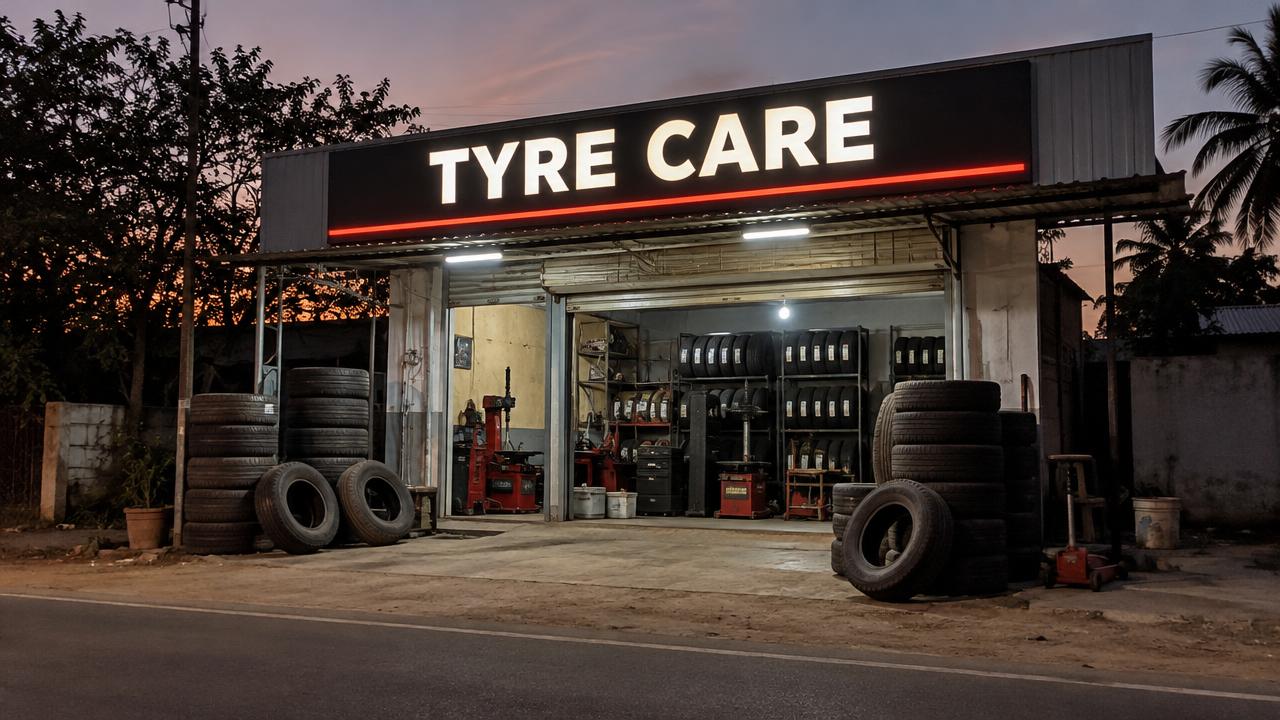
Start where the customer starts: on the road. Stand where an approaching motorist or two-wheeler rider would first see the shop and ask whether the brand is identifiable within a few seconds. Note the board's size relative to the frontage, its height, the viewing angle from both directions of traffic and anything blocking it — trees, electric poles, neighbouring boards, parked vehicles or awnings.
Record the board type as well. An ACP fascia, an LED-lit board, a glow sign, 3D letters or a projecting sign each behaves differently by day and night. A board that reads well at noon may become invisible after 7 pm if its lighting has failed.
2. Brand consistency across outlets
Compare each outlet with your current brand guidelines. Are the logo, colours and typography correct? Is an old logo still in use? Has a local painter recreated the brand by hand? Are dealer name panels in the agreed position and proportion?
Inconsistency is rarely one dramatic failure. It is usually many small deviations — a slightly wrong red, a stretched logo, a mismatched font — which together make the network look less organised than it really is. An audit makes these deviations visible so they can be corrected in a planned way.
3. In-shop POSM and product displays
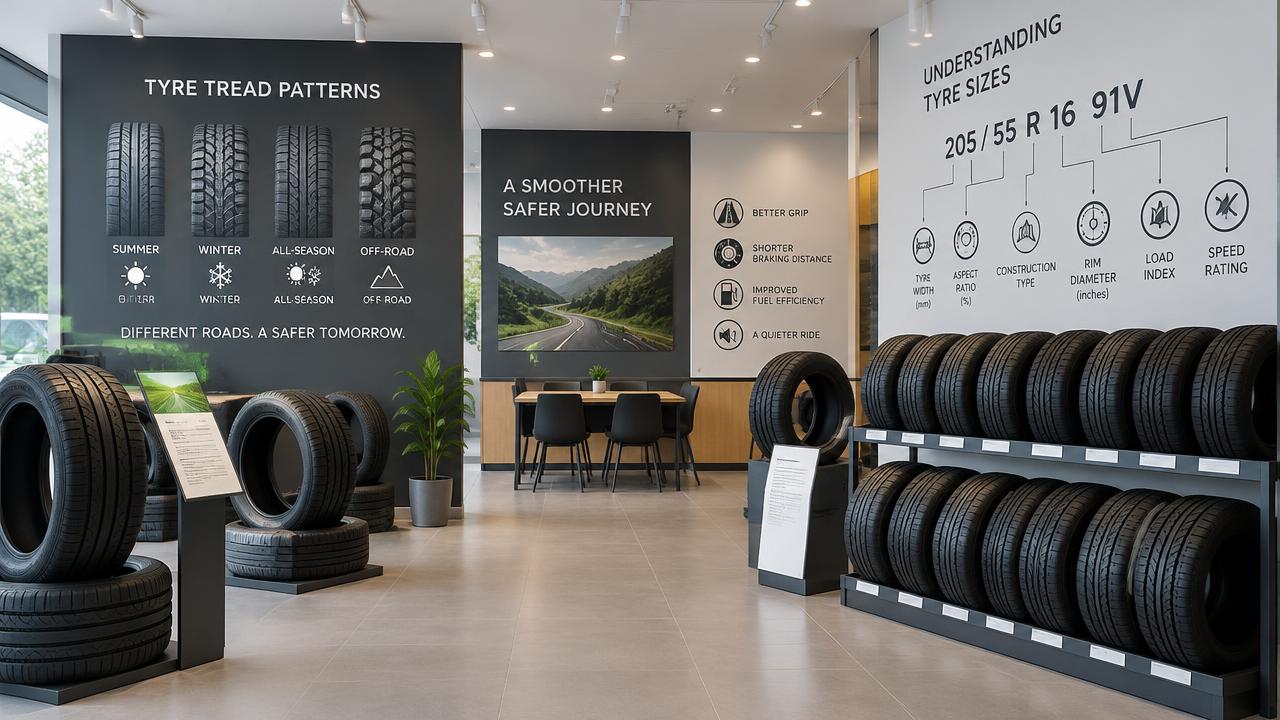
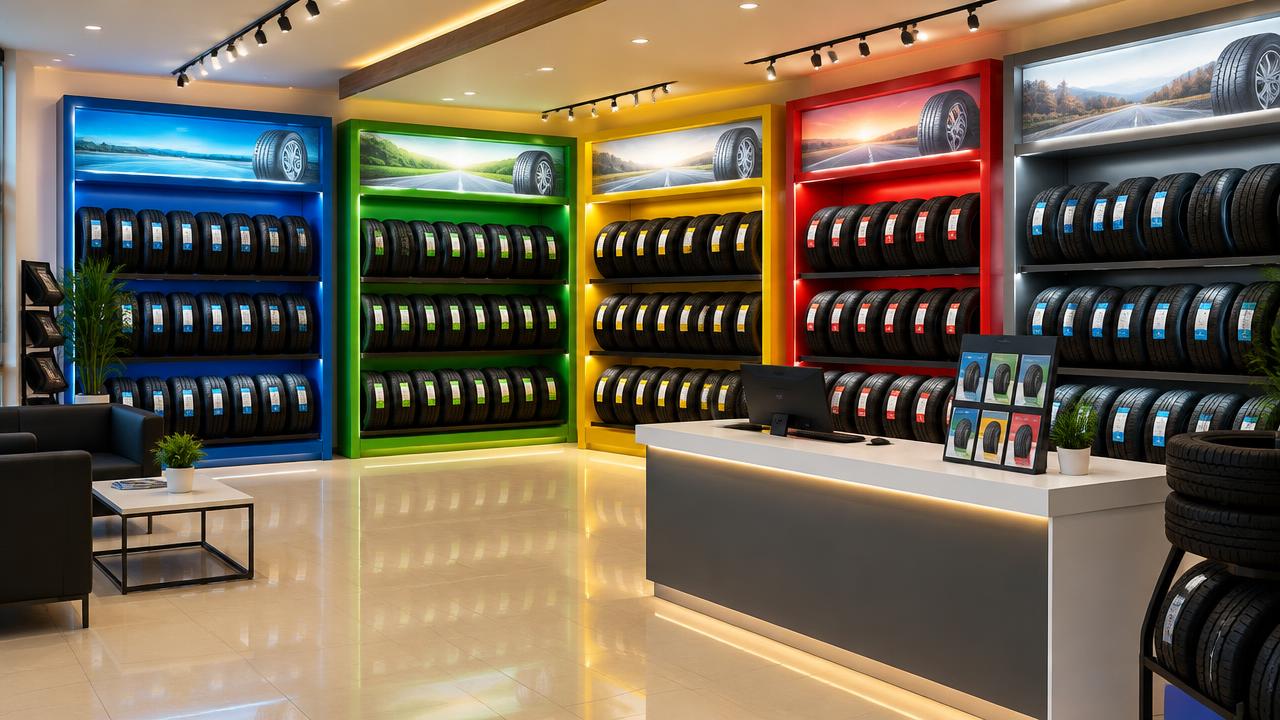
Many tyre purchase decisions are finalised inside the shop, at the rack or the counter. Check whether your tyres are displayed in a clearly branded area, whether rack headers and side panels are present and intact, and whether product information — sizes, patterns, applications, warranty messages — is easy to find.
Note POSM such as standees, danglers, counter displays, tread-pattern boards and wall graphics. Are they current, correctly placed and actually used, or stored behind the counter? Also note how much space competing brands occupy compared with yours.
4. Lighting
Lighting deserves its own line in the audit because it fails quietly. Check whether illuminated boards work fully, partially or not at all, whether lighting is even across the board, and whether the shop interior is bright enough for customers to read product information. Where possible, take a photograph after dark as well as during the day; the difference is often striking.
5. Outdated promotional materials
Old scheme posters, expired offers and faded campaign banners send the wrong message. They suggest that the brand is not paying attention and can confuse customers about current prices or offers. Record any outdated material and make its removal part of the next action plan, even where no new branding is planned.
6. Dealer feedback
The dealer and the shop staff see the branding every day and hear what customers ask. Include a few short questions in every audit: Which displays do customers actually notice? What gets damaged most often? Is there wall or rack space that could be better used? Is anything in the current kit difficult to maintain or simply ignored?
Dealer input improves the quality of later upgrades and makes dealers more willing to accept and look after the new branding.
7. Site measurements
An audit is also the right moment to capture the measurements a later upgrade will need: frontage width, available fascia height, wall sizes, rack dimensions, mounting surfaces, access constraints and the location of power points for illuminated boards. Measurements taken during the audit save a second site visit and reduce the risk of manufacturing boards that do not fit.
An illustrative 100-point audit scorecard
A simple weighted scorecard helps compare outlets fairly and spot patterns across a region. The weights below are an illustrative starting point, not a fixed standard — adjust them to match your priorities.
- Exterior visibility — 20 points: readability from the road, size, height, obstructions.
- Condition — 15 points: fading, damage, rust, peeling vinyl, broken panels.
- Brand consistency — 15 points: correct logo, colours, typography and layout.
- In-shop displays — 20 points: rack branding, POSM, product information, share of display space.
- Lighting — 10 points: working illumination outside and adequate light inside.
- Promotions — 10 points: current campaign material present, outdated material removed.
- Dealer usability — 10 points: whether displays are practical, maintained and actually used.
Start with a representative 10-outlet pilot
Rather than auditing the entire network at once, begin with around ten outlets chosen to represent the variety in your network: large and small shops, urban and highway locations, exclusive and multi-brand dealers, and different regions. The pilot tests the checklist, the scoring and the photo format, and shows how long each audit realistically takes.
Pilot results also give an early, grounded view of the common problems and likely costs, which is far more useful for budgeting than an assumption applied to every outlet.
Maintenance, selective upgrade or full refresh
Audit scores make it easier to decide what each outlet needs instead of applying one solution everywhere. Typically, outlets fall into three groups:
- Maintenance: branding is broadly correct; fix lighting, clean or replace vinyl, remove outdated material.
- Selective upgrade: replace specific elements — the fascia, rack panels or in-shop graphics — while keeping what still works.
- Full refresh: the outlet is significantly off-standard, damaged or invisible, and a complete new branding package is justified.
Use a digital photo survey
Standardise the photographs taken at each outlet: a road-approach view from each direction, a straight-on fascia shot, the entrance, each branded wall and rack, and a night view where possible. Record the outlet code, address, date and GPS location with each set. A consistent digital record allows head office to review outlets remotely, compare them later and use the same photos as the 'before' reference after any upgrade.
A note on sales attribution
It is tempting to link audit-led upgrades directly to sales growth. Be cautious. Tyre sales are influenced by season, pricing, schemes, competitor activity, local demand and the dealer's own effort. Better branding can improve visibility and support the dealer's sales conversation, but it is one contributor among several. Where you want to measure impact, compare upgraded outlets with similar outlets that were not upgraded over the same period, and track enquiries, walk-ins and dealer feedback alongside sell-out figures.
How Sign Ad India can help
Sign Ad India supports multi-location branding projects from site survey and measurement through design, in-house printing, fabrication and installation. Our capabilities include ACP and LED sign boards, glow signs, 3D and bent letters, UV and large-format printing, CNC routing and laser cutting, lamination, and in-shop branding such as wall graphics, rack panels and POSM.
If you are planning a dealer branding audit or an upgrade programme, share your outlet count, locations and requirement. We can prepare a corporate proposal or discuss a 10-outlet pilot audit as a starting point.
Frequently asked questions
What is a tyre dealer branding audit?
A structured review of how a tyre brand appears at each dealer outlet — exterior signage, consistency, in-shop displays, lighting and promotional material — usually with photographs, measurements and a score.
How often should dealer branding be audited?
Many brands review key outlets once a year and before major campaigns, but the right frequency depends on network size, climate and budget.
Why start with a 10-outlet pilot?
It tests the checklist, scoring and photo format on a representative mix of outlets and gives realistic time and cost estimates before a wider rollout.
Will an audit guarantee higher dealer sales?
No. An audit identifies visibility and branding gaps so upgrades can be planned sensibly; sales also depend on price, schemes, season and dealer effort.
Discuss your dealer branding requirement
Share your outlet count, locations and requirement, and our team will prepare a proposal.