QSR Multi-Outlet Signage: Keeping Your Brand Consistent Across Every Location
When a QSR brand grows from three outlets to thirty, signage consistency becomes a management challenge. Here is a practical framework for standards, surveys and rollout.
Why consistency matters for QSR brands
Quick service restaurants depend on recognition. Guests choose a familiar brand because they know what to expect: the menu, the price range and the experience. Signage is often the first signal of that familiarity. If one outlet has a bright, correct fascia and another has faded colours, a different font or a home-made banner, the brand looks less reliable.
Consistency also matters for franchise partners, landlords and mall operators, who judge a brand partly by how well its outlets are presented.
The common causes of inconsistency
Inconsistency rarely comes from bad intentions. It usually grows from practical pressures.
- Each outlet or franchisee hires a local signage vendor.
- Brand guidelines exist but do not specify materials, sizes or lighting.
- Different site sizes lead to improvised designs.
- Repairs and replacements are done with whatever material is available.
- Promotional material is printed locally without approval.
- No one keeps a record of what is installed where.
Create a signage standards manual
A signage standards manual translates brand guidelines into fabrication instructions. It should specify logo lock-ups, colours with material references, fonts, letter heights, materials, lighting type, mounting details and approved layouts for different frontage sizes.
Include photographs or renders of correct and incorrect applications. A standards manual is most useful when it is practical enough for a site engineer or a franchise partner to follow without interpretation.
Define sign packages by outlet type
Not every outlet is the same. A high-street outlet, a mall food court unit, a kiosk and a highway drive-through need different sign sets. Instead of designing each site from scratch, define a small number of packages.
- Package A – high street: fascia, blade sign, window graphics, menu boards, interior feature wall.
- Package B – mall or food court: fascia within mall guidelines, menu boards, counter branding.
- Package C – kiosk or compact: compact fascia, menu panel, counter wrap.
- Package D – highway or stand-alone: pylon, fascia, directional signs, drive-through menu if applicable.
Survey every site before fabrication
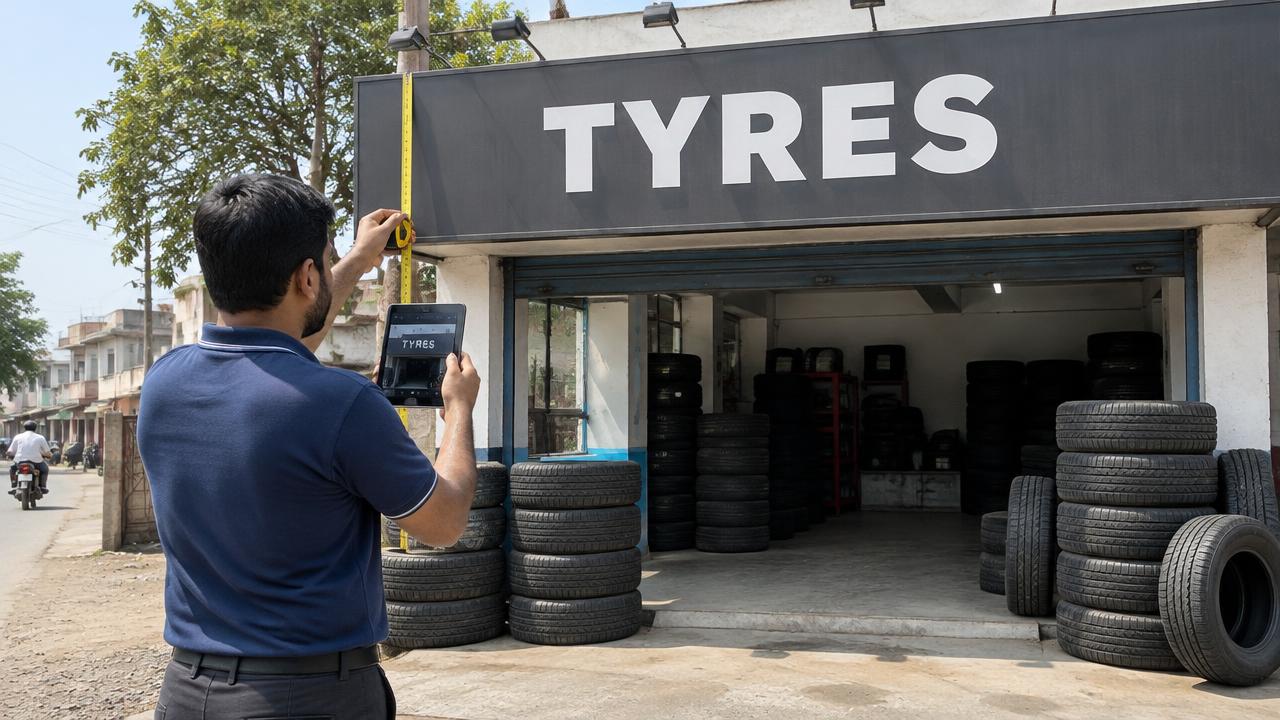
Even with standard packages, each site needs a survey. Measure the frontage, check fixing surfaces, power points, sight lines, mall or landlord rules and any obstructions. Photograph the site and record the details in a standard format so designs can be adapted quickly and consistently.
A survey checklist used by every surveyor keeps information comparable across outlets and reduces repeat visits.
Pilot before rolling out
Before rolling out to many outlets, install the standard package at a small number of representative sites. Use the pilot to check readability, lighting, durability, installation time and cost. Gather feedback from operations teams and franchise partners.
Adjust the standards manual based on what you learn, then roll out with confidence. A pilot costs time upfront but avoids repeating the same mistake at every outlet.
Manage fabrication and installation centrally
Centralised fabrication helps maintain consistent colours, materials and finishes. Signs can be produced in batches and dispatched to sites with installation kits and instructions. Installation teams should follow a standard method statement and submit completion photographs.
Completion reports with before and after images, installation dates and any issues create a record that helps with maintenance and future refreshes.
Control promotional and local material
Promotions change frequently, and this is where inconsistency often creeps back in. Provide approved templates for menu inserts, standees and window posters, and define where they can be placed. Supplying campaign kits from one source keeps the look consistent and makes it easier to remove expired material.
Maintenance and refresh cycles
Signs fade, LEDs fail and panels get damaged. Plan periodic audits of every outlet's signage, using a simple checklist and photographs. Prioritise repairs that affect visibility and brand perception. Over time, plan refresh cycles so older outlets are brought back to the current standard.
Understanding cost across many outlets
When comparing quotations for multi-outlet rollouts, look beyond the factory rate per square foot. The installed cost includes survey, design adaptation, transport, installation at height, electrical work, permissions support and after-sales service. A clear breakdown helps compare vendors fairly and plan budgets per outlet.
Common mistakes to avoid
Multi-outlet rollouts magnify every small mistake, because the same error is repeated at many sites. These are the issues most worth guarding against.
Treating signage as a programme rather than a series of separate orders helps avoid these problems. One owner of the standards, one record of installed signs and a regular audit cycle are simple disciplines that pay back across every outlet.
- Rolling out to many sites before testing the design at a pilot outlet.
- Writing brand guidelines that describe colours on screen but not material references.
- Allowing each franchise partner to appoint a different local vendor without standards.
- Skipping site surveys and relying on landlord drawings that may be outdated.
- Not recording what was installed, making repairs and audits difficult later.
Questions to ask your signage partner
For a multi-outlet programme, the signage partner becomes an extension of the brand team. These questions help assess whether a partner can support consistency at scale.
- How will you adapt our standard packages to different frontage sizes?
- What survey checklist will your teams use at each site?
- How will colour and material consistency be maintained across batches?
- What will each completion report include?
- How do you handle repairs and refreshes after rollout?
How Sign Ad India can help
Sign Ad India supports multi-outlet signage programmes with site surveys, design adaptation to standards, in-house fabrication of ACP fascias, 3D acrylic and stainless steel letters, LED and glow signs, menu boards and in-store branding, followed by installation and completion reporting. We can start with a pilot before a wider rollout.
Frequently asked questions
Why do QSR chains need signage standards?
Standards keep fonts, colours, materials and lighting consistent across outlets, which protects brand recognition and simplifies fabrication.
What should a signage standards manual include?
Logo usage, colours with material references, fonts, letter heights, materials, lighting, mounting details and layouts for different frontage sizes.
How do you handle different outlet sizes?
Define a small number of sign packages, such as high street, mall, kiosk and highway, and adapt each to the site survey.
Should we run a pilot before rollout?
Yes. A pilot at a few representative outlets helps refine design, cost and installation before committing to every site.
How can franchise outlets be kept consistent?
Supply approved designs, centralised fabrication and campaign kits, and audit outlets periodically.
What is included in installed cost?
Survey, design adaptation, fabrication, transport, installation, electrical work and after-sales support, in addition to the material rate.
Can existing outlets be brought up to a new standard?
Yes. Audit current signage, prioritise the most visible gaps and plan phased refreshes.
Plan a consistent signage rollout for your outlets
Share your outlet list, locations and brand guidelines, and we will propose a survey, pilot and rollout plan.