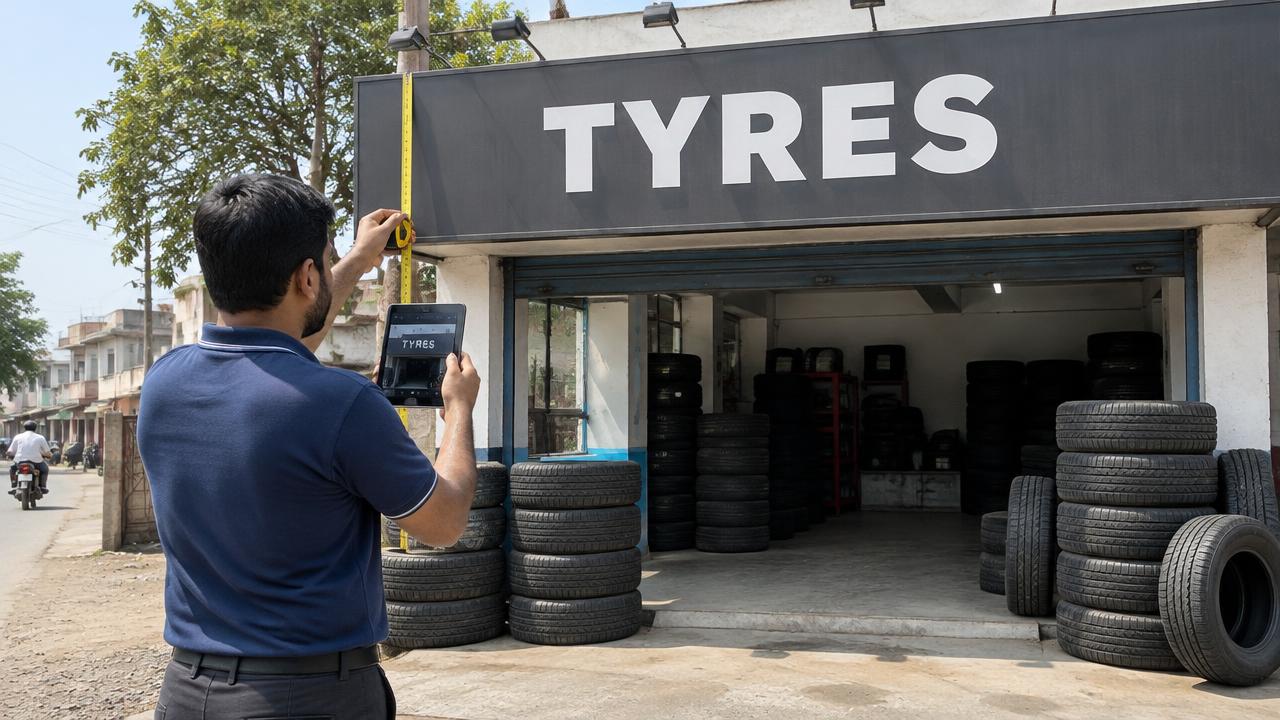
Roadside Advertising That Drives Tyre Dealer Enquiries
Most tyre purchases begin on the road, often when a driver notices a problem or remembers that replacement is due. Roadside advertising places the brand and the nearest dealer in front of drivers at that moment. This guide explains formats, locations, messaging and measurement for tyre dealer outdoor campaigns.
Why roadside advertising suits the tyre category
Tyres are bought by people who drive, and those people spend a lot of time on the road. A driver who notices uneven wear, a slow puncture or a warning from a mechanic is often already thinking about where to go. If a well-placed hoarding or directional sign shows a nearby dealer at that moment, the decision can become much easier.
For a tyre manufacturer, roadside advertising does two things at once: it builds brand awareness among drivers, and it directs them to specific dealer outlets. When planned carefully, it connects national brand investment with local dealer enquiries.
Choosing the right formats
Different roadside formats serve different purposes. Large hoardings and unipoles on highways and arterial roads offer high visibility and build awareness. Smaller formats closer to the outlet, such as pole signs, directional boards and gantry panels, help drivers find the outlet and turn in safely.
Many campaigns combine both: an awareness format a few hundred metres before the outlet and a directional or identification sign at the outlet itself. Vehicle branding on dealer service vans and delivery vehicles adds moving visibility within the local area.
- Hoardings and unipoles: awareness on highways and main roads
- Directional boards: guide drivers to the outlet
- Pole and projecting signs: identify the outlet from a distance
- Bus shelters and median panels: urban visibility
- Vehicle branding: mobile presence in the catchment
Location matters more than size
A large hoarding in the wrong place delivers little value. For tyre dealers, the best locations are usually on routes that pass close to the outlet, especially where traffic slows down, such as before junctions, near fuel stations, at toll approaches or on busy arterial roads. Highway outlets benefit from signs placed early enough for drivers to decide and slow down safely.
Survey each location before booking. Check sightlines, obstructions such as trees or other hoardings, traffic speed, lighting and the side of the road the sign faces. A site visit with photographs from the driver's perspective prevents expensive mistakes.
Messages that can be read at speed
Drivers have only a few seconds to read a roadside message. The most effective designs use a strong visual, a short headline, the brand and a clear direction or distance to the outlet. Long lists of products, phone numbers in small type or detailed offers are rarely read.
Use high contrast and large lettering. A recognisable tyre image, the brand colours and a simple arrow or distance marker often work better than complex creative. If a contact detail is included, make it short and easy to remember.
- One clear headline of a few words
- Strong product or brand visual
- Distance or direction to the outlet
- High contrast colours and large type
- Minimal additional text
Illumination and night visibility
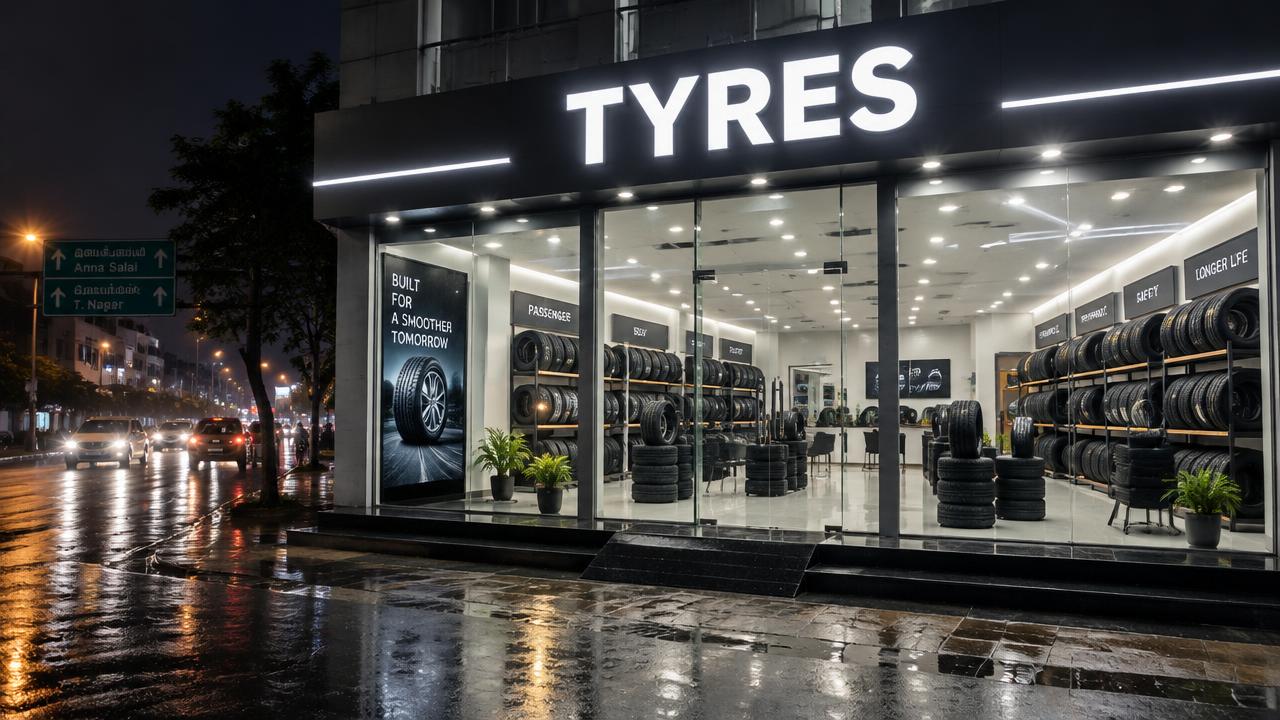
A significant share of road travel happens in the evening and at night. Unlit hoardings become nearly invisible after dark. Front-lit hoardings with suitable fixtures, backlit panels or LED-illuminated signs extend visibility into the hours when many working drivers are on the road.
Lighting must be maintained. A hoarding with failed lamps is worse than useless; it suggests neglect. Include lighting checks in the maintenance plan and coordinate with the media owner where applicable.
Connecting roadside to the outlet
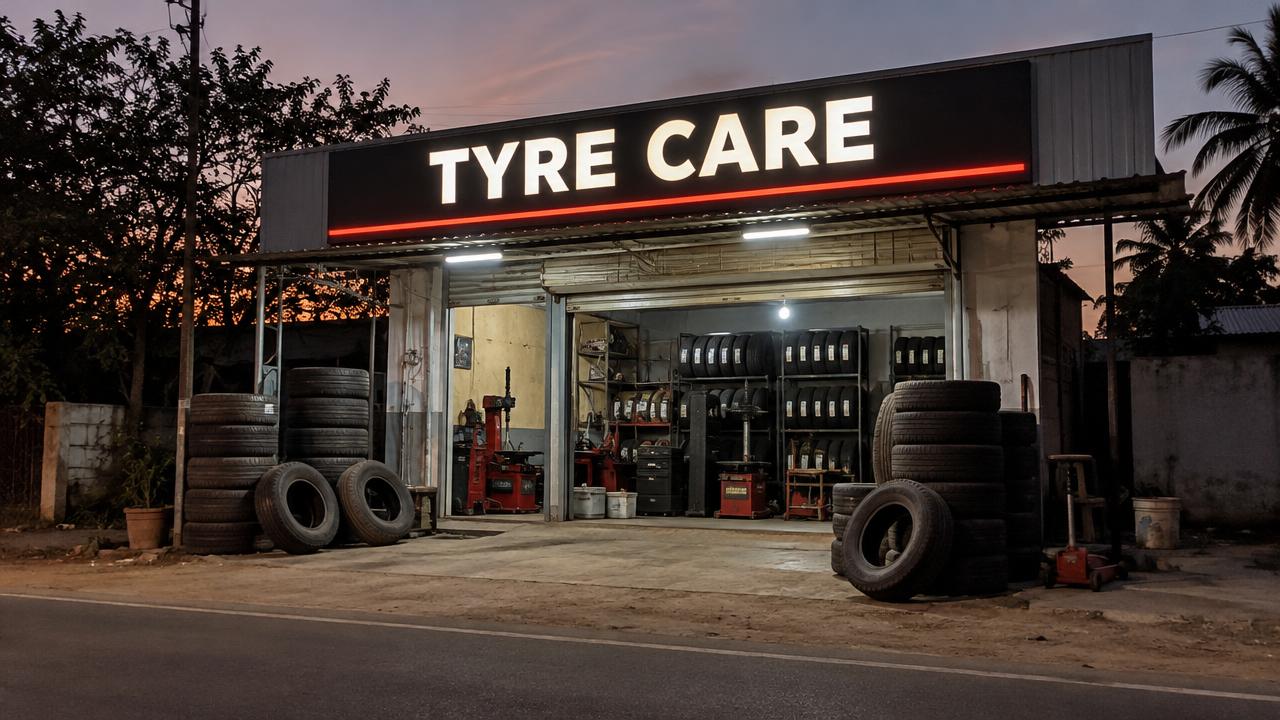
Roadside advertising works best when the outlet itself delivers on what the sign promises. If a hoarding invites drivers to a premium tyre centre, the fascia should be clearly visible, the entrance easy to find, and the outlet tidy and well branded. A mismatch between an impressive hoarding and a tired outlet reduces trust.
Consistent branding helps drivers connect the sign with the outlet. Using the same colours, typography and imagery on hoardings, directional boards and fascia creates a clear visual trail from the road to the counter.
Permissions and practical considerations
Outdoor advertising in India is subject to local authority rules, and permissions vary by city and road type. Hoardings and unipoles are usually booked through media owners who manage permits, while signs on dealer property need to comply with local regulations. Structural safety and wind loading should be considered for any large installation.
Plan campaigns with these factors in mind, and allow time for approvals and installation. Avoid placing signs where they could distract drivers dangerously or obstruct traffic signals and road signs.
Measuring roadside campaign results
Roadside advertising is harder to measure than digital media, but useful indicators exist. Dealers can ask new customers how they heard about the outlet, track walk-ins and enquiries during the campaign, and monitor calls or QR scans if a dedicated number or code is used. Comparing campaign outlets with similar outlets without outdoor support gives a more balanced view.
Attribution should be cautious. Seasonal demand, schemes, pricing and other media all influence results. A pilot covering around ten outlets with different road types and catchments helps understand which formats and locations work before scaling.
Planning a network-wide roadside programme
For a manufacturer supporting many dealers, roadside advertising needs a structured approach. Start by mapping dealer outlets against major routes and traffic flows. Identify which outlets would benefit most from awareness formats, which need directional support, and which already have strong natural visibility.
Standardise creative templates so local adaptations, such as distance markers or outlet names, can be added quickly without redesigning each sign. Agree a clear process for site approval, production, installation and maintenance. Keep a central record of every roadside asset, including location, format, photographs, installation date and lighting status. This makes it easier to review performance, plan renewals and avoid paying for signs that are no longer visible because of new construction or roadside changes.
How Sign Ad India can help
Sign Ad India provides outdoor advertising, signage and vehicle branding support. This can include site surveys, hoarding and unipole creative adaptation and printing, directional and pole sign fabrication, ACP and LED fascia signage at the outlet, vehicle graphics, installation and photographic completion reports.
If you want roadside visibility to guide more drivers to your dealers, share your outlet locations and objectives. Our team can prepare a dealer branding proposal or discuss a 10-outlet audit enquiry covering both roadside and outlet visibility.
Frequently asked questions
What is the most effective roadside format for tyre dealers?
It depends on the location. Hoardings and unipoles build awareness on busy roads, while directional and pole signs near the outlet help drivers find and enter it. Many campaigns combine both.
How much text should a tyre hoarding have?
As little as possible. A short headline, a strong visual, the brand and a direction or distance are usually enough, because drivers have only a few seconds to read.
Do roadside signs need permission?
Yes, outdoor advertising is subject to local authority rules. Media owners usually manage permits for hoardings, while signs on dealer property must follow local regulations.
Can roadside advertising guarantee more enquiries?
No. It can improve visibility and direction, but results depend on location, outlet quality, pricing and season. Measuring with dealer feedback and comparison outlets gives a realistic picture.
Guide more drivers to your dealers
Share your outlet locations and campaign goals, and we will prepare a dealer branding proposal or discuss a 10-outlet audit enquiry covering roadside and outlet visibility.