Tyre Display Stands That Help Customers Compare Products
Tyres look similar to most customers until someone helps them see the difference. Well-designed display stands turn a wall of black rubber into a clear comparison, helping customers understand tread, purpose and value. Here is how tyre manufacturers can plan stands that dealers will actually use.
The comparison problem at the tyre counter
To most car owners, one tyre looks very much like another. The sidewall markings are hard to read, tread patterns seem similar from a distance, and stacked tyres hide whatever differences there are. When customers cannot see a difference, they tend to decide on price alone, and the premium range a manufacturer has worked hard to develop becomes just a more expensive option.
Display stands solve part of this problem. By presenting tyres individually, at eye level, with clear information beside them, a stand turns a confusing choice into a visible comparison. The customer can see the tread, touch the rubber, and read in simple language what each tyre is designed to do.
What a good tyre display stand should do
A display stand is not just a holder. It is a sales tool that should support a specific conversation between the dealer and the customer. Before designing one, it helps to define what the stand must achieve on the shop floor.
- Present the tyre so the tread pattern is clearly visible
- Hold the tyre securely at a comfortable viewing height
- Provide a panel for range name, intended use and key benefits
- Allow easy updating of information when ranges change
- Fit into typical dealer spaces without blocking movement
- Look consistent with the manufacturer's brand identity
Types of stands and where they work best
Different outlets need different formats. A single-tyre pedestal stand works well near the entrance or counter to highlight a hero product. A multi-tyre comparison stand, holding two to four tyres side by side, helps customers see the difference between good, better and best options. Wall-mounted brackets save floor space in smaller shops while still presenting tyres individually.
For outlets with more space, a modular stand system can be combined into a feature island. Rotating stands are eye-catching but have more moving parts and need sturdier construction. In most dealer environments, simple static stands made from powder-coated metal or ACP with good graphics are the most durable choice.
- Single pedestal stand: hero product near entrance or counter
- Side-by-side comparison stand: range ladder for consultation
- Wall brackets: space-saving display for compact outlets
- Modular island: larger outlets and experience centres
Designing the information panel
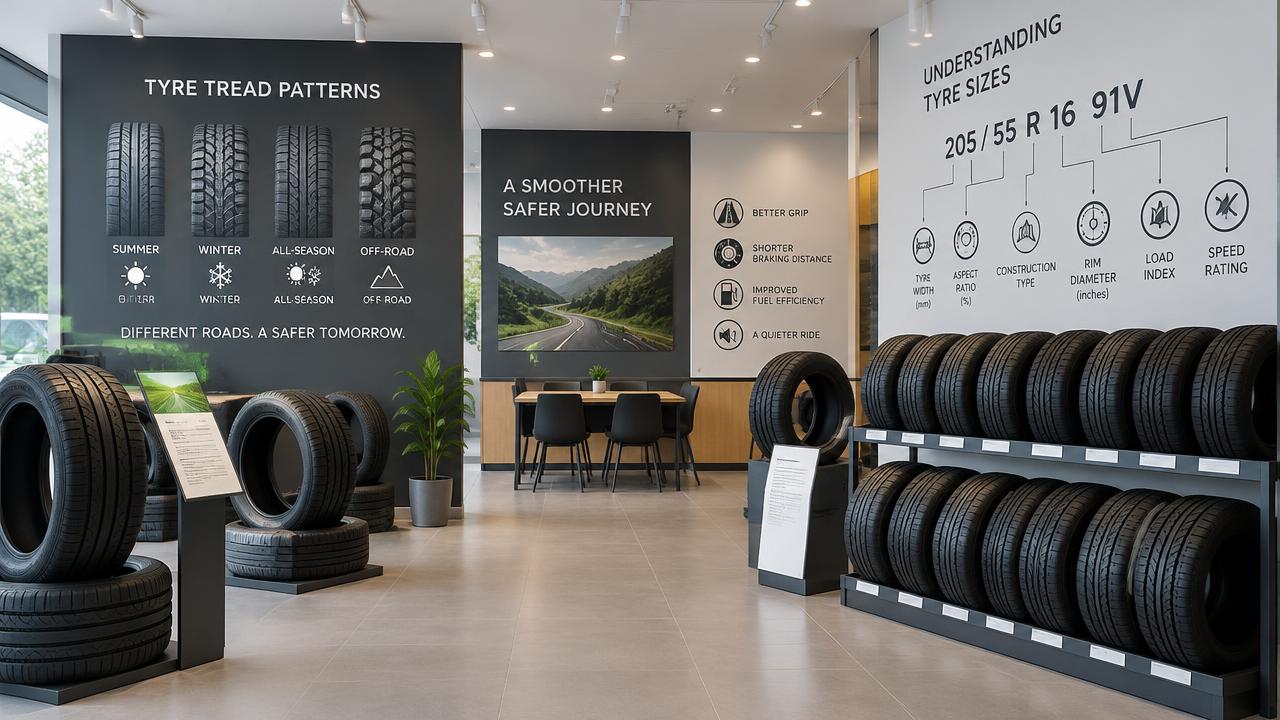
The information panel matters as much as the stand itself. Customers spend only a few seconds reading, so the panel should be simple. Use the range name, a short description of who it is for, and three or four benefits written in plain language. Icons for wet grip, comfort, durability or noise can help, provided they reflect the manufacturer's approved product information.
Avoid crowding the panel with technical specifications that customers do not understand. Detailed data can sit on a QR code that links to the product page. Make sure text is large enough to read from a step away and printed on material that resists fading and fingerprints. Interchangeable panels, such as slide-in acrylic pockets or magnetic graphics, let dealers update information without replacing the stand.
Building a clear range ladder
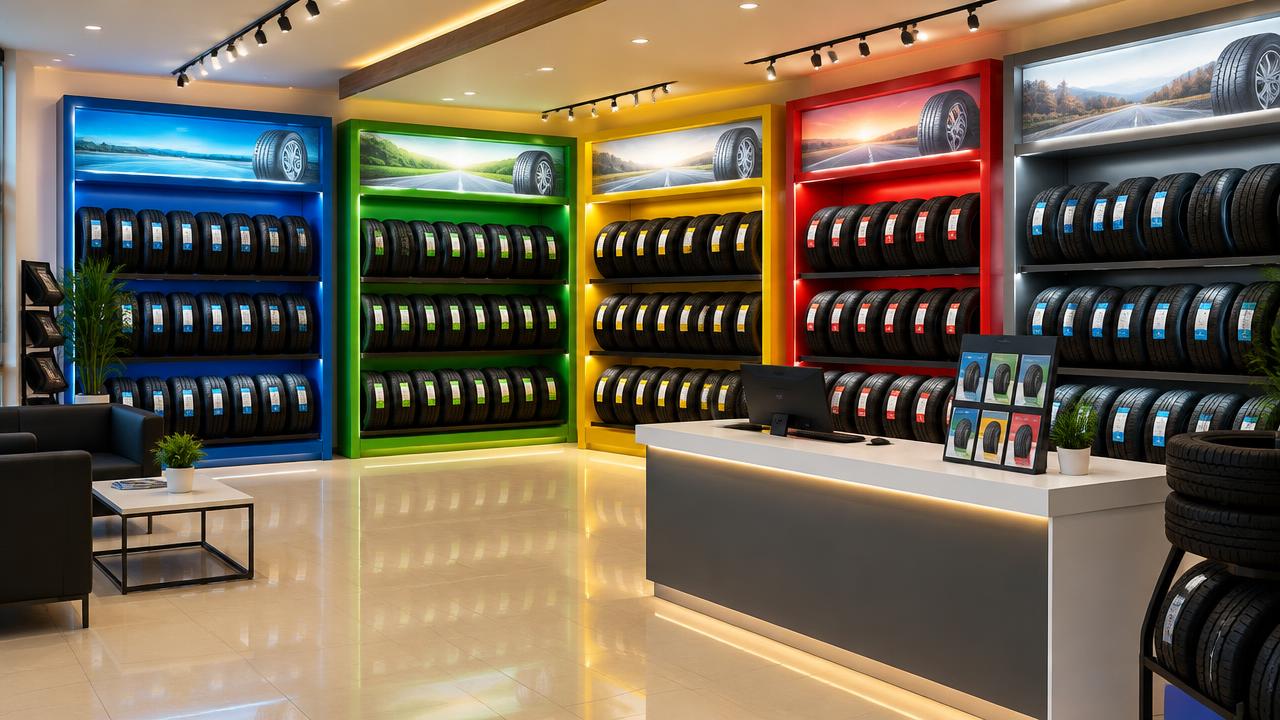
One of the most useful jobs a stand can do is show a range ladder. Placing an entry, mid and premium option side by side, with consistent panel formats, helps customers understand what they gain as they move up. This gives staff a simple, honest way to explain value without pressure.
The ladder should be curated rather than exhaustive. Showing every size and pattern causes confusion. Choose representative products for the most common vehicle segments in that outlet's catchment, and let staff bring out specific sizes from stock once the customer has chosen a direction.
Placement inside the outlet
Even a well-designed stand fails if it sits in a corner behind stacked stock. Stands work best where customers naturally pause: near the entrance, beside the counter, or in the waiting area. They should be visible from the point where the conversation usually starts.
Lighting is important. Tyres absorb light, and a stand in a dark spot looks flat. A small directional light or a backlit panel makes the tread visible and draws attention. Keep a clear walking path around the stand so customers can step closer without squeezing past stock or equipment.
Durability and dealer practicality
Tyre outlets are tough environments. Stands get bumped by trolleys, exposed to dust and sometimes moved by staff to make room. Specify materials that tolerate this: powder-coated steel frames, ACP or rigid PVC panels, rounded edges, and stable bases that do not tip when a heavy tyre is placed off-centre.
Talk to dealers early. They know where space is tight and what staff will actually maintain. A stand that dealers find inconvenient will quietly be pushed aside within weeks. Simple assembly, easy cleaning and replaceable graphics make it far more likely that the stand stays on the floor and in use.
Rolling stands out across a dealer network
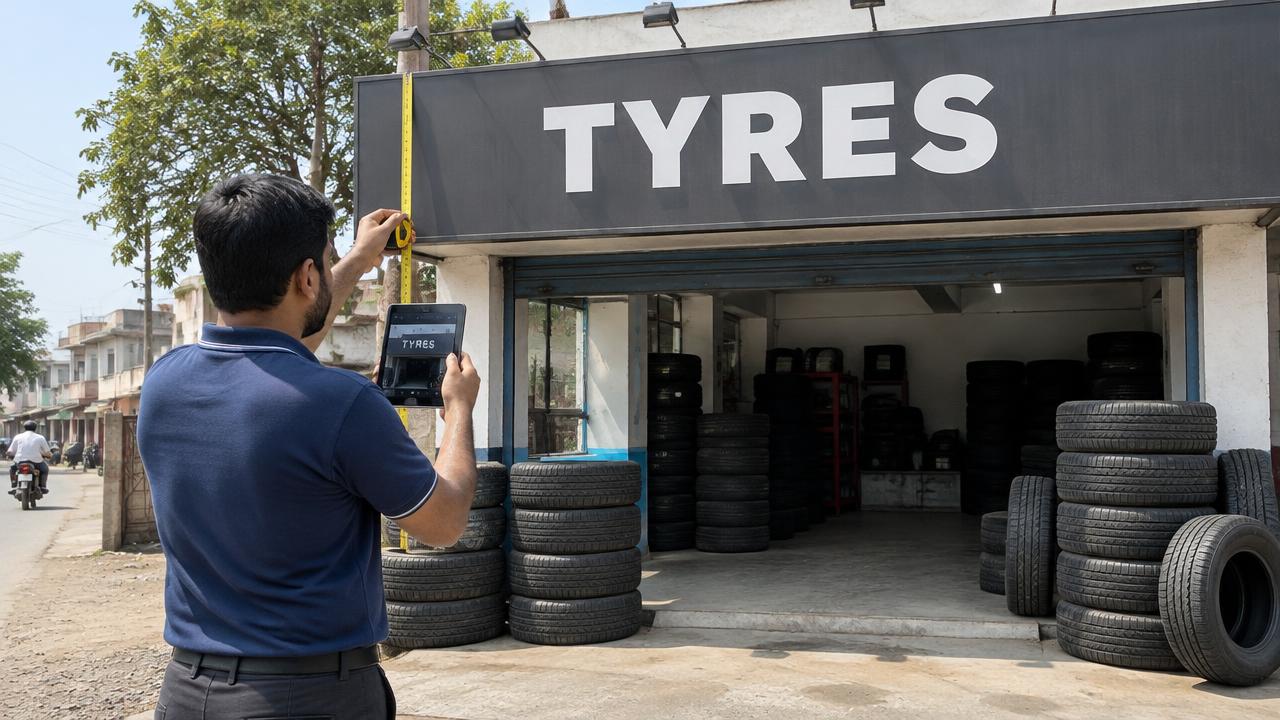
For a manufacturer, the value of display stands comes from consistency across many outlets. A good rollout starts with standard designs in two or three sizes, a survey to decide which outlets receive which units, and central manufacturing so quality and finish match everywhere.
Begin with a pilot at around ten representative outlets. Observe whether staff use the stands during conversations, whether customers engage with them, and whether any design changes are needed. Dealer feedback and simple measures, such as how often the premium option is discussed or chosen, can guide refinements. Be careful in interpreting sales data, as pricing, schemes and seasonal demand also influence results.
- Standardise two or three stand formats
- Survey outlets to allocate the right units
- Manufacture centrally for consistent quality
- Pilot, collect feedback and refine before scaling
- Record installation with photographs for each outlet
How Sign Ad India can help
Sign Ad India supports tyre manufacturers and other brands with in-shop branding, fabrication and printing. For display stands, this can include design development, metal and ACP fabrication, CNC and laser cutting of components, UV and large-format printing for panels and graphics, and installation at dealer outlets.
We can also align stands with fascia signage, wall graphics and counter branding so the entire outlet looks consistent. If you are planning a display programme, share your range structure and outlet count and our team can prepare a dealer branding proposal or discuss a 10-outlet audit enquiry.
Frequently asked questions
How many tyres should a comparison stand display?
Two to four tyres usually work well. This is enough to show a clear range ladder without overwhelming the customer or taking too much floor space in a typical dealer outlet.
What materials are best for tyre display stands?
Powder-coated steel frames with ACP or rigid PVC panels are durable and easy to clean. The base must be stable enough to hold a heavy tyre safely, even if it is placed slightly off-centre.
Can information panels be updated when ranges change?
Yes. Slide-in acrylic pockets, magnetic graphics or replaceable printed panels allow dealers to update range information without replacing the whole stand.
Will display stands increase premium tyre sales?
Stands can make product differences easier to see and support staff in explaining options, but they cannot guarantee sales. Results should be measured carefully alongside pricing, stock and seasonal factors.
Plan display stands for your dealer network
Tell us about your tyre ranges, outlet count and locations, and we will prepare a dealer branding proposal or discuss a 10-outlet audit enquiry for a display stand pilot.